Spirulina Ghana is a project in Ghana, testing the feasibility of intensively cultured tilapia feeding solely on spirulina, in a recirculation aquaculture.

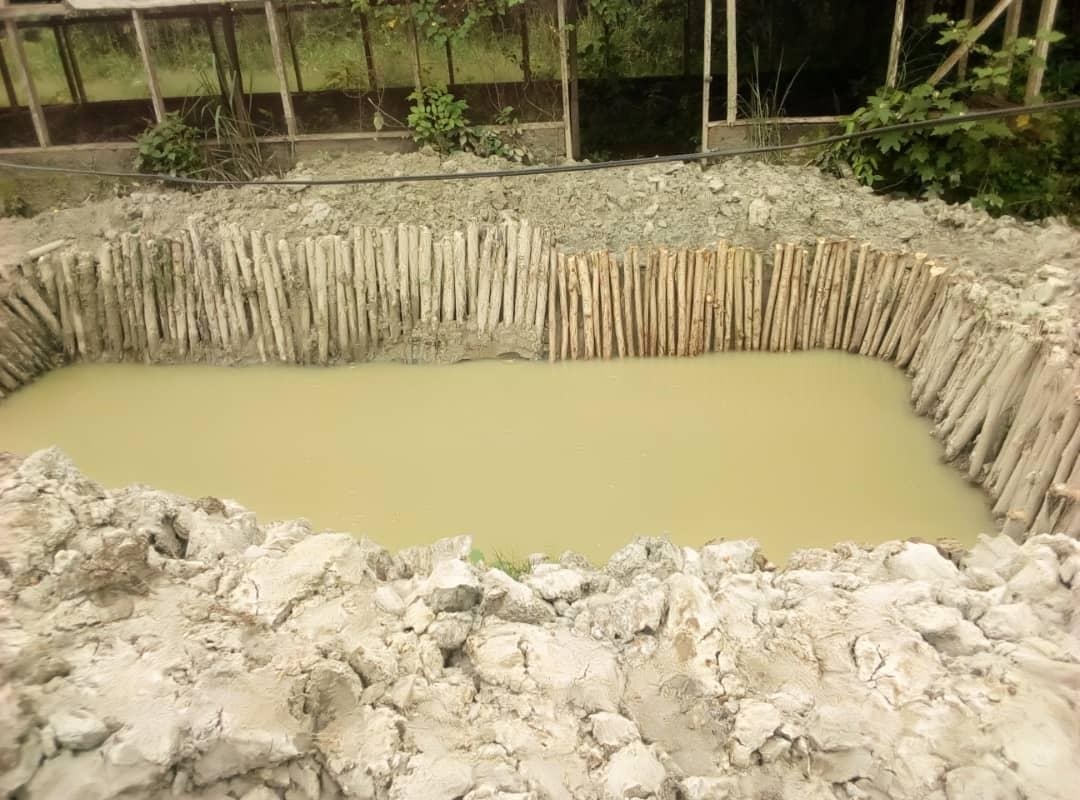
The spirulina is cultured in an open raceway, fed with sawdust, urine and manure. The green water from the raceway overflows into an 'intermediate' earthen pond. As the site is a water-locked area, groundwater automatically replenishes all water lost through evaporation. The mixture of green water and groundwater is pumped into the fish pool; a pvc swimming pool with a center bottom drain, fitted with a standpipe. The fish pool drains into the raceway; its solids providing nutrients for spirulina. In this setup, the accumulated costs for electricity, and for the supply of manure, urine and sawdust account for the costs for feeding. In a traditional setup, feeding costs account for 60 to 70% of operational costs.




Setup and Results
* A single 4.2 meter diameter pool, with 75 cm water, may yield 1200 kg fish per year
* Fish are stocked at 30 kg biomass per cubic meter water
* Waterflow is 230 ml/s, provided by a single circulation pump
* the yield of spirulina is 11 kg dry weight per square meter, per year
* 1 square meter spirulina raceway supports a yield of 2 kg fish per year


Spirulina Micro Farming
* Fresh, raw spirulina as animal feed, produced and consumed onsite
* Complete feed, including omega-3 fats (link and link), but particularly gamma-linolenic acid
* High protein (up to 65%) and high protein quality (38% better than maize protein quality)
* Contains 90% of the energy that maize contains
* Spirulina (safely) feeds on manure, urine, saw dust, CO2 and sunlight
* No costs for harvesting, processing, transport, go-betweens, and storage
* No need for herbicides / pesticides, as Spirulina is a weed that dominates all other organisms in set conditions
* No need for fertile soil, as Spirulina grows in (eg concrete) raceways (eg on barren land or rooftops)
* Replacing standard animal feeds with Spirulina would easily solve the world food supply crisis
* Provides rural employment
* Negative Carbon Footprint (Spirulina consumes carbon and CO2, and no import/transport/processing involved)


Commercial Edge
Africa is plagued by corruption. This is a beneficial condition for those producing below the radar, while competing with imports subject to corruption. Specific to rural Africa is poor infrastructure. This is a beneficial condition if you produce locally and are competing with transported products. Both conditions have been projected to last. Corruption is engrained in all layers of Ghanaian society. And even in urban suburbs confined to expensive houses, houseowners fail to unite in upgrading, or even maintenance of the local infrastructure, resulting in high-end cars trying to evade potholes. Internet, on the other hand, is everywhere; even the most remote villages are covered.
Rural Africa is the perfect setting for micro farming.


Contact: email info@ our domain

Powered by: